


What funds are needed for underwater oil pipelines for electric heating on the skin effect
Published on:
2023-04-20 18:03
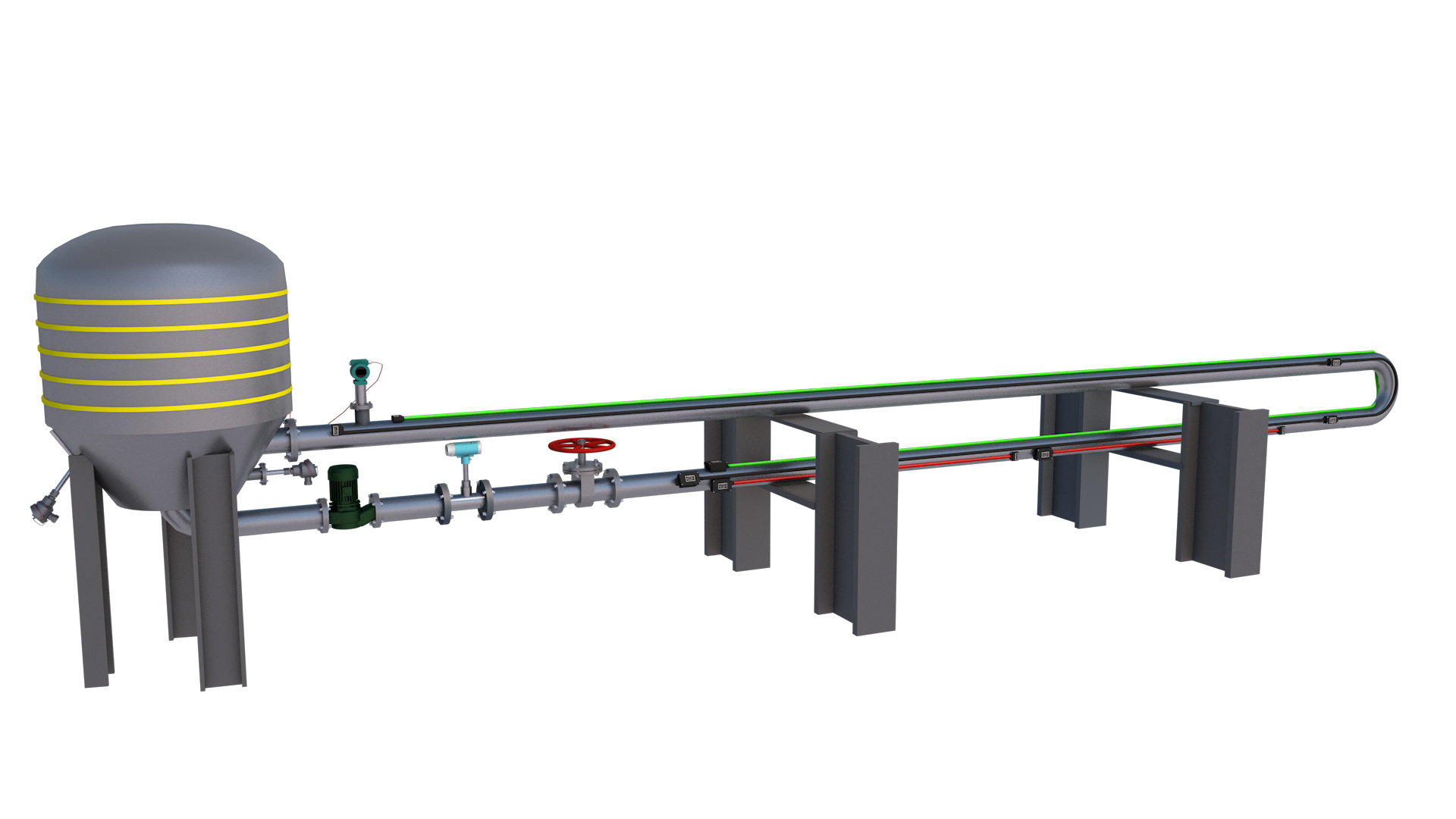
Skin effect electric heating is a heating technology based on two electromagnetic field effects: skin effect and proximity effect. The so-called skin effect is a phenomenon in which, when an AC current passes through a carbon steel conductor, the current is gradually concentrated on the surface of the conductor. The proximity effect is an electromagnetic phenomenon that passes through opposite conductors with current When a high-frequency return current flows through adjacent conductors, the current in the conductor is displaced to flow close to the surface of another conductor due to the magnetoelectric effect. The heat-resistant cable is placed on the steel heating pipe, and alternating current passes through one end of the cable. When AC passes through the cable through the wall of the heating pipe, the current flows unevenly. Along the pipe wall under the influence of the skin effect and proximity effect., but concentrate on the inner surface of the heating pipe, and flow through the wall of the pipe, but concentrate on the inner surface of the heating pipe, and the wall of the tube collects electricity. Under the influence of the effect and the proximity effect, the current does not flow evenly along the wall of the tube, but concentrates on the inner surface of the heating tube, The conductive section of the skin layer of the pipe wall decreases, and the alternating current resistance increases significantly. With the same current, the pipeline receives more heating power, and the pipeline is heated by conductivity.

After adding the power supply, the charges flowing through the heat pipe and wire will produce a skin effect and a proximity effect, that is, the electric field generated by the charges flowing in one direction will attract the charges in the other direction. Because of this gravity, charges in both directions will tend to flow along the paths closest to each other, the charge inside the heat pipe will tend to the inner wall of the heat pipe, and the charge in the wire will tend to the outer surface of the wire. Since the area through which the charge flows is very small, the resistance is very large and a large amount of heat is released, and the heat pipe transfers heat to the underwater pipeline to achieve the heating purpose. Since the current is concentrated on the inner surface of the steel pipe, there is almost no current on the outer surface, so it can form a good insulating structure, and the electric heating with the skin effect is safe and reliable.

The number of channels for electric heating on the skin effect should be determined based on the diameter and length of the particular subsea pipeline, the physical properties of the medium in the pipeline, and environmental conditions. A single channel is typically used to improve reliability. Is used as a backup. The main components of electric heating on the skin effect are:
(1) Heat pipe. The material of the heat pipe is a common carbon steel pipe, and the heat pipe is welded to the subsea pipe by intermittent welding. The heat pipe is the main heating part of the leather effect electric heating, and its heat dissipation accounts for 90% of the total heat dissipation.
(2) Wire with skin effect. The leather effect wire is generally single core copper wire, and the insulation layer is made of heat-resistant and wear-resistant materials. The wire is another heating element, and its heat dissipation constitutes the leather effect wire in general heat. Generation. The leather effect wire is generally single core copper wire, and the insulation layer is made of heat-resistant and wear-resistant materials. The wire is another heating element, and its heat dissipation is 10% of the total heat dissipation.
(3) Distribution box. Including a junction box at the first end, a junction box in the middle, and a junction box at the rear end, which are respectively used to connect the different parts in the chain.
(4) Power supply. The skin effect electric heating power source must be designed according to the actual situation on the subsea pipeline and generally uses industrial frequency AC.
(5) Control Panel. Provide power supply and on/off control circuit for electric heating system.
(6) Temperature detection system. It is used to determine the operating temperature of the subsea pipeline and to signal the control panel to monitor the temperature of the subsea pipeline to keep it within an appropriate range.
Previous Article
Latest News

Shandong Huaning Electric Heating Technology Co.,Ltd
Email: hnxs012@chinahuaning.com
Phone: +8618554011093
whatsapp: +8618554011093
Wechat:18554011093
Address: Xinxing Street, Industrial Park, Shanghe County, Jinan City, Shandong Province